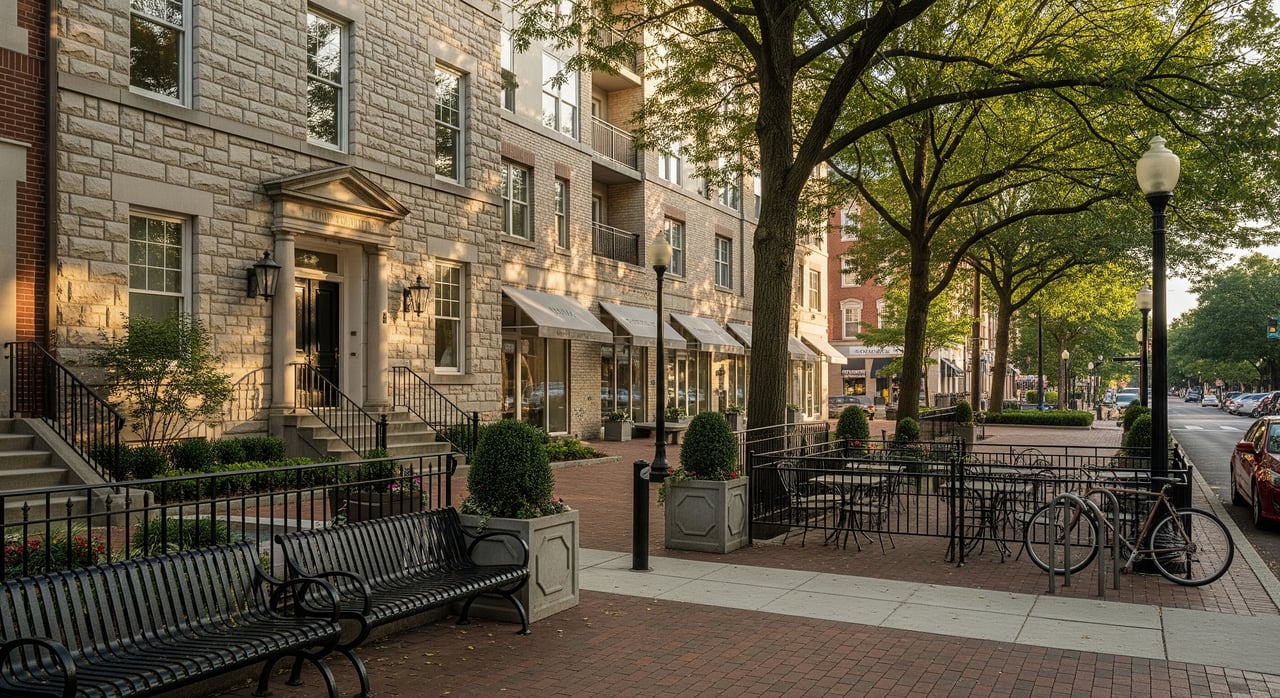
What if your morning coffee, favorite lunch spot, and evening stroll were all a five-minute walk from home? If you’re curious about Clayton’s walkable core, you’re likely picturing a daily routine that feels easy and connected. You want convenience without giving up green space, and a neighborhood where errands and dining fit into your day. In this guide, you’ll see how walkable living in Clayton actually works, from transit and parks to housing tradeoffs and practical tips. Let’s dive in.
Clayton’s walkable core at a glance
Clayton serves as St. Louis County’s civic and business hub. The most walkable area is centered along the Maryland Avenue and Forsyth Boulevard corridor, with offices, dining, and services woven together. The blocks are compact, so crossing between shops, cafés, and fitness studios is quick.
Weekdays bring steady foot traffic from office workers and lunch crowds. Evenings and weekends feel more relaxed but still lively, with restaurants and events drawing people out. A few blocks off the core, residential streets quiet down while staying within reach of daily needs.
If you live close to the core, you can walk to coffee, lunch, basic shopping, fitness, and civic services. For larger grocery runs or big-box stops, most residents plan a short drive.
A day on foot in Clayton
Morning routines
Start with coffee or breakfast, then head to a fitness class or a quick errand. Service businesses like dry cleaners, salons, and small markets are clustered along the main streets, so it’s easy to stack errands without getting in the car.
Midday and afternoon
Midday, you’ll find a mix of quick counter-service spots and sit-down restaurants. If you work nearby, lunch is a short walk. If you work elsewhere, meetings or appointments at civic buildings and professional services are also close.
Evenings and weekends
After work, grab dinner, meet friends for a drink, or take a walk. Seasonal events and cultural activities add energy to the area, and you can pivot easily between plans without worrying about parking at every stop.
Parks and public spaces you’ll use
Shaw Park is the downtown-adjacent green space that anchors outdoor life in Clayton. It offers everyday access to open lawns, walking paths, and areas for recreation. You’ll also find amenities such as playgrounds, athletic courts and fields, and aquatic facilities. Throughout the year, events and programs bring neighbors together.
Smaller pocket parks, tree-lined streets, and plazas give you quick outdoor breaks between errands. If you want to balance an urban routine with fresh air and room to move, the core makes it simple to do both.
Groceries and daily errands
Within the core, you can handle many basics on foot thanks to small markets and specialty retailers. For bigger weekly shops, most residents plan a short drive to larger supermarkets. Many households pair walkable errands with delivery or pickup for the heavy lifts. It keeps the car from becoming a daily necessity while still covering everything you need.
Getting around without the car
Light rail and bus access
Clayton is served by light rail and bus routes that connect to downtown St. Louis and other employment and education centers. If your commute aligns with the system, you can go car-free or car-light on workdays. Route frequency and hours vary by line, so check current schedules when planning.
Driving and parking realities
When you do drive, you’re close to major highways. Commute times can be short in light traffic, though rush hour will add time. In the core, you’ll find a mix of metered street parking and public garages. Residential streets may have permit zones that vary by block. Condo buildings typically offer assigned parking, while single-family homes may rely on driveways or on-street options.
Biking and micromobility
Many short trips are bikeable thanks to compact block sizes and designated routes in parts of the city. Availability of bike-share or scooters depends on current vendors and local rules. If you prefer wheels over walking, you have options for quick, close-in errands.
Housing close to the action
Condo living: what to expect
Mid-rise condo buildings and apartments make up most of the walkable blocks. You’ll see a mix of older conversions and newer developments with amenities.
Pros:
- True walkability to dining, services, parks, and transit
- Reduced exterior maintenance
- Amenities such as secured entry and fitness spaces
- Potential views from upper floors
Cons:
- HOA fees and building rules
- Limited private outdoor space compared to a yard
- Possible parking fees or limitations
- Street activity may add noise at busier hours
Single-family near the core
A few blocks out, you’ll find one- and two-family homes and townhome-style options. Larger homes sit in surrounding residential neighborhoods and may be less walkable depending on the exact block.
Pros:
- More private space and a yard
- Greater control over property changes
- Quieter streets
Cons:
- Longer walks to the core for daily needs
- Full responsibility for maintenance
- More frequent driving for errands
Which option fits your lifestyle
If you value elevator access, low maintenance, and being steps from dinner or the train, a condo near the corridor may fit best. If you want room to spread out, space for outdoor living, and quieter evenings, a single-family home a bit farther from the center may be the better match. Many buyers consider both and decide based on their commute, weekend routines, and long-term plans.
Costs beyond the purchase price
Budget for recurring expenses that are common in the core:
- HOA or condo fees for shared maintenance and amenities
- Utilities and municipal fees
- Monthly garage or assigned parking if not included
- Property taxes tied to county assessments
- Occasional special assessments in buildings, depending on reserves and projects
Knowing these ahead of time helps you compare a condo beside the corridor with a single-family home a few blocks away.
How to test-drive walkable Clayton
- Map your everyday needs. Identify your most frequent errands and see what’s within a few blocks of the addresses you like.
- Visit at different times. Check weekday mornings, weekend afternoons, and a weeknight evening to understand noise, traffic, and energy.
- Try your commute. Time public transit and driving options so you know how it feels on a normal day.
- Note parking patterns. Walk the surrounding blocks and nearby garages to see how guest and resident parking works.
- Confirm schools by address. The Clayton School District is generally well-regarded, but always verify current school assignments and explore programs that matter to your family.
How we help you compare options
You have choices in Clayton. We help you narrow them with a practical plan:
- Buyer representation with neighborhood expertise focused on lifestyle fit
- Relocation support that aligns commute, schools, and daily routines
- Consulting on condo associations, fees, and maintenance tradeoffs
- Private tours that include daytime and evening visits for a realistic sense of each block
If you want a smooth process backed by local insight, we’re here to help you move with confidence.
Ready to see what walkable living could look like for you? Connect with The Lottmann Group to schedule a market consultation and start planning your next move in Clayton.
FAQs
Is Clayton’s downtown truly walkable for daily errands?
- Yes. Coffee, lunch, fitness, basic shopping, and civic services are clustered along the core corridor, with larger grocery runs typically a short drive away.
How close is green space if I live near the corridor?
- Shaw Park sits next to the core and offers open lawns, paths, playgrounds, athletic areas, and programmed events that you can reach on foot.
Does Clayton have public transit to downtown St. Louis?
- Clayton is served by light rail and bus routes that connect to downtown and other job and school centers; check current schedules for exact routes and times.
What should I know about parking in the walkable core?
- Expect a mix of metered street parking and public garages. Some residential streets use permits, and condo buildings often include assigned or paid spaces.
Are schools in Clayton considered strong?
- The Clayton School District is generally well-regarded. Always verify school assignments by address and review current programs and performance that matter to your family.