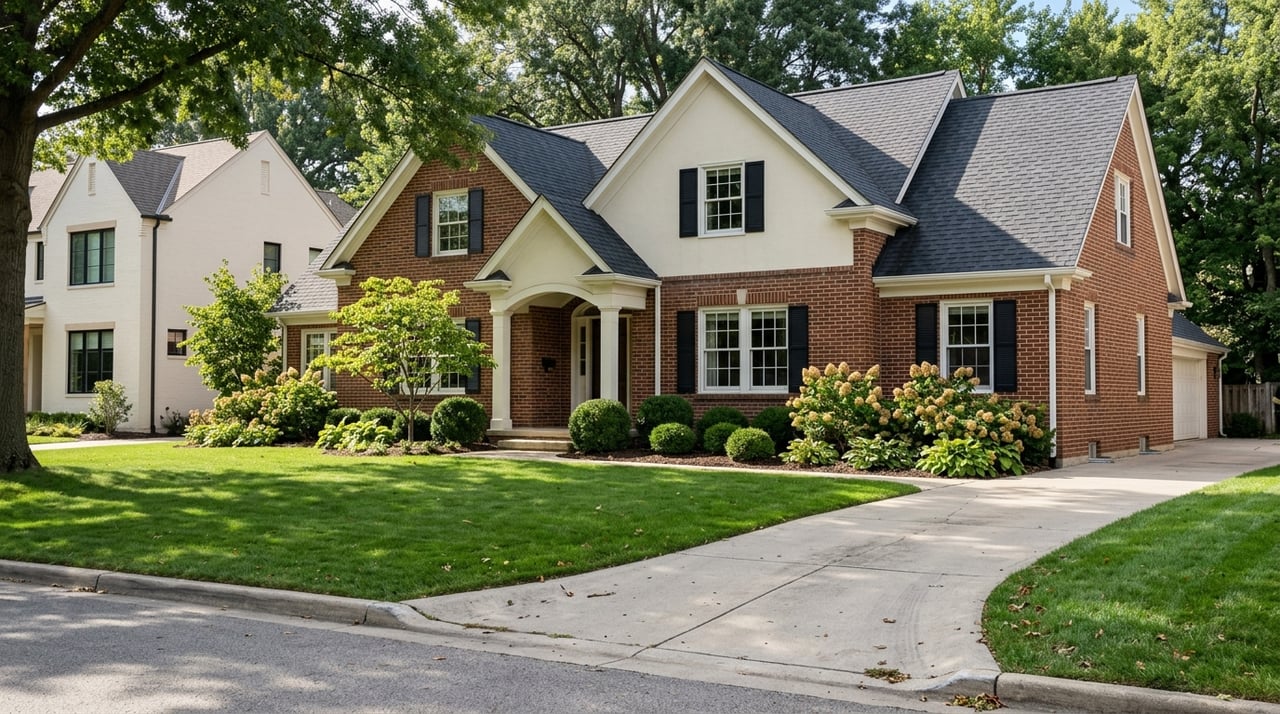
Wondering whether a brand-new home in Chesterfield is worth the premium, or if an established neighborhood gives you more of what you want day to day? It is a common question, especially in a market where home values sit well above the broader St. Louis County average and where buyers often care just as much about long-term fit as they do about finishes. If you are weighing new construction against an older neighborhood in Chesterfield, this guide will help you compare the trade-offs that matter most. Let’s dive in.
Chesterfield housing at a glance
Chesterfield is a stable, largely owner-occupied market. The U.S. Census Bureau reports a 78.4% owner-occupied housing unit rate, a $458,000 median value for owner-occupied homes, and 86.2% of residents living in the same home a year earlier. That points to a community where many owners stay put and where inventory decisions can carry long-term weight.
It is also a higher-price market than the county overall. For context, St. Louis County has a $276,800 median value for owner-occupied homes, according to the U.S. Census Bureau quick facts for Chesterfield. That price gap helps explain why buyers in Chesterfield often look closely at value, maintenance, lot utility, and resale potential before making a move.
What new builds look like
New construction in Chesterfield is not one single product type. Some newer projects include a mix of 39 single-family detached homes and 42 single-family attached units, along with private roads, pocket parks, a nature trail, and an 8-foot-wide multi-use sidewalk, according to a recent Planning Commission packet. In other words, some new communities are built around convenience, shared amenities, and a more coordinated layout.
Other projects lean more toward estate-style living. One city subdivision packet required a 22,000-square-foot minimum lot size, 110-foot minimum lot width, and 30% common open space, with the HOA responsible for maintaining shared features, as outlined in this Chesterfield planning document. That means newer homes can range from more compact, walkable settings to larger-lot neighborhoods with a more private feel.
You are also seeing newer residential product tied to bigger redevelopment efforts. The city describes Downtown Chesterfield as a mixed-use central business district with office, hotel, and density residential uses organized around a central park. At the same time, the city’s 2025 annual budget notes that Downtown Chesterfield is moving forward and that Wild Horse Village continues to add residential product.
What established neighborhoods offer
Established neighborhoods in Chesterfield often reflect a more traditional suburban pattern. The city’s Comprehensive Plan describes suburban neighborhoods as areas typically developed with single-family detached homes and relatively uniform housing densities, where homes vary in size and streets remain suburban in character, as noted in the same Planning Commission materials. For many buyers, that translates into a more settled look and a stronger sense of continuity from street to street.
You may also find a wider range of home ages and architectural updates in these areas. Chesterfield includes older residential fabric too, not just later suburban development. A city memo references Ballwin Acres, which was platted in 1925, along with an existing home on Kehrs Mill Road built in 1927, according to this planning memo.
That longer development history can create more variety from one block to the next. Some buyers love that character and flexibility. Others prefer the uniformity and newer systems that often come with recently built homes.
Lot size and outdoor space
One of the biggest differences between new builds and established neighborhoods in Chesterfield is how outdoor space is configured. Newer communities can go in two very different directions. Some offer a more compact footprint with attached homes, private roads, and shared amenities, while others provide larger detached lots with open space requirements and a more estate-style plan.
Established neighborhoods are more likely to follow older suburban layouts and consistent street patterns. If you want a neighborhood that feels fully built out, that may appeal to you. If you want newer sidewalks, shared green space, or a low-maintenance yard setup, newer construction may be the better fit.
A helpful question to ask yourself is this: How do you want to use your outdoor space? If your priority is a large private yard, your search may look different than if you would rather trade some lot size for newer finishes or a more amenity-driven layout.
HOA and maintenance differences
Many newer Chesterfield communities come with some level of HOA structure. In several recent projects, the HOA is responsible for maintaining common features or landscaping, based on the city planning documents linked above. That can reduce some owner responsibilities, but it also means dues, community rules, and shared decision-making.
For some buyers, that trade-off is worth it. You may spend less time managing exterior upkeep or shared spaces. For others, HOA costs and restrictions are an important part of the total ownership picture, so it makes sense to review those details carefully before you buy.
Established neighborhoods can feel less structured in this area, but that does not always mean lower maintenance. Older streets, sidewalks, and surrounding infrastructure may require periodic attention over time. Chesterfield’s Public Works monthly report notes active city-funded slab replacement projects, which is a useful reminder that aging infrastructure is part of the long-term ownership equation in older areas.
Design and neighborhood character
If design consistency matters to you, new construction has a built-in advantage. Chesterfield applies Architectural Review Standards to vacant or undeveloped land as well as redevelopment, which means site and building design are reviewed rather than left completely open-ended. That tends to create a more coordinated look in many newer communities.
Established neighborhoods usually reflect earlier subdivision patterns, along with years of renovations and updates by different owners. That can mean more variation in exterior style, landscaping, and floor plan layouts. Some buyers see that as added charm, while others want the predictability and polish that often comes with newer development.
Neither option is automatically better. It comes down to whether you prefer a more curated neighborhood feel or a more layered one that has evolved over time.
Resale value is about fit
It is easy to assume newer always means better resale, but that is not the full story in Chesterfield. With home values above county norms, a stable ownership base, and a shrinking supply of remaining residential land, future value is likely tied to the full ownership picture, not just the age of the home. That includes lot utility, maintenance costs, HOA obligations, location within Chesterfield, and how well the home matches what future buyers want.
In practical terms, a well-located home in an established neighborhood may outperform expectations if it offers the layout, lot, and condition buyers want. A new build may also hold strong value if it delivers modern design, efficient use of space, and a lifestyle buyers are seeking. The better question is not simply, "Is it new?" It is, "Does this home fit the way people want to live in Chesterfield?"
How to choose the right fit
If you are deciding between a new build and an established neighborhood, it helps to compare them through your own priorities.
Choose a new build if you value
- Newer finishes and systems
- A more coordinated community design
- Potential HOA-managed common areas or exterior elements
- Mixed-use or amenity-oriented settings in some projects
- Lower near-term maintenance on major components
Choose an established neighborhood if you value
- A more settled suburban feel
- Traditional street patterns and older neighborhood fabric
- More variation in architecture and updates
- Potentially different lot layouts and yard configurations
- A community with a longer development history
Ask these questions before you decide
- Do you want a detached single-family home, or are attached options on the table?
- How important is lot size versus newer interior finishes?
- Are HOA dues and rules a benefit or a drawback for you?
- Would you rather budget for possible updates over time or pay more upfront for newer construction?
- Which setting feels more natural for your day-to-day life?
A smart Chesterfield move starts with clarity
In Chesterfield, both new builds and established neighborhoods can be strong choices. The right option depends on how you weigh maintenance, layout, lot size, neighborhood character, and long-term value. When you compare those factors carefully, you are much more likely to land on a home that feels right now and still works well years from now.
If you want help narrowing down the best fit in Chesterfield, The Lottmann Group offers buyer guidance, relocation support, and local market insight tailored to your goals.
FAQs
What types of new construction homes are available in Chesterfield?
- Chesterfield’s newer housing includes both single-family detached homes and single-family attached units, along with some mixed-use, higher-density residential development in areas like Downtown Chesterfield.
Do Chesterfield new builds usually come with an HOA?
- Many newer Chesterfield developments include HOA involvement, especially for maintaining common areas, landscaping, or other shared features, but the structure can vary by community.
Are established Chesterfield neighborhoods mostly single-family homes?
- Yes. The city’s Comprehensive Plan describes suburban neighborhoods as typically made up of single-family detached homes with relatively uniform housing densities and suburban street character.
Do older Chesterfield neighborhoods have more maintenance concerns?
- They can. Older homes and infrastructure may require more periodic attention over time, and city Public Works activity shows that street and sidewalk maintenance is an ongoing part of caring for more established areas.
Is buying a new build in Chesterfield always better for resale value?
- Not necessarily. In Chesterfield, resale value is more likely tied to total ownership cost, lot utility, home condition, and how well the property fits buyer demand than to whether the home is simply newer.